Security · Core
Information Security Analyst
$124,910
median annual
Projected growth+29%
EntryBachelor's
Cyber defense, AI security, infrastructure, and the quantum transition — taught as one stack, with AI fluency built into every course. Real labs, funded industry certifications, and a straight line to the jobs a 2031 graduate will actually apply for.
DHS Cyber students unlock 4 Florida scholarships and an 18-credit diploma pathway not available to non-CTE students.
The four pillars name problems that don't expire — defend systems, secure AI, build and run the infrastructure, survive the crypto transition. AI didn't shrink this market. It moved the entry rung up — and this program trains for the rung that's left.
// Cyber defense growth from U.S. Bureau of Labor Statistics 2024–2034 employment projections; SOC automation trend from industry analyst forecasts. AI security policy figures from Metomic's State of Data Security reporting. Infrastructure figures from Uptime Institute and AFCOM State of the Data Center reporting. Post-quantum deadlines from Executive Order 14412 and NIST IR 8547. Projections are demand signals, not guaranteed earnings — but the trend line is unambiguous.
Most high school tech programs teach cybersecurity as a single silo. We teach four durable problem spaces as one stack — and treat AI the way industry now treats electricity: not a subject. The substrate under everything.
AI fluency isn't one of the four. It's embedded in all of them — every pillar teaches students to use, direct, and verify AI inside that discipline, the way every discipline assumes electricity. Threaded alongside it: Python & automation, technical writing, and the adversarial judgment AI removed from entry-level training — the layer this program deliberately manufactures.
Ten emails. Some are real. Some are bait. The same drill DHS Cyber students run on day one — built in-house from real attack patterns, including the principal-impersonation scam that has cost Florida districts millions.
Six destination roles current Destin students can realistically aim for after the pathway, further training, and a few years of experience. Wages and growth are national medians — and the entry rungs beneath them are exactly what this program's 2031 framework targets.
// Salary and growth data: U.S. Bureau of Labor Statistics (May 2024 wage data, 2024–2034 employment projections). Growth percentages shown as proportional to the fastest-growing role in the set. Figures are medians — real compensation varies by region, specialization, and experience.
Capstone projects are where the pathway becomes real. Industry certifications are where it becomes hireable. Students graduate with both.
Build a capture-the-flag challenge system with categories across web, crypto, and forensics — the kind of platform the program uses internally.
Train and deploy a language model that identifies phishing emails by content, context, and sender behavior.
Design and operate a small network that enforces zero-trust principles — no implicit trust, verify every transaction.
Implement a working demonstration of a NIST post-quantum algorithm and compare it to today's standard encryption.
Build a small toolkit that demonstrates common ML attacks — data poisoning, evasion, and model extraction.
The pathway is designed to leave every option open — direct entry to work, a two-year associate's, or a four-year bachelor's. Certifications carry weight on all three routes.
Walk out of DHS with industry-recognized certifications and enter the workforce immediately — including the data-center lane the AI buildout can't staff fast enough. Lowest-cost, fastest-earning option.
Pursue an associate's in cybersecurity, IT, or computer science — with the certifications already in hand, students finish fast and transfer if they want.
Pursue a bachelor's in cybersecurity, computer science, or a related field. Certifications make applications competitive and scholarships more accessible.
Four problems that don't expire. Tools re-baselined every summer. Every path open — work, college, or both. We prepare Destin students for 2031, not 2015.
Every platform, every certification, every tool, and every reading source we use in the Applied Cybersecurity pathway. Built for current students, prospective students, parents, and anyone who wants to actually do the work.
Direct access to the platforms and environments we use in class. Log in with your school credentials.
Every certification listed below is on the Florida CAPE Industry Certification Funding List (2026–27 list, Rule 6A-6.0576), Information Technology primary career cluster, K-12 funding eligible. Note: beginning 2026–27, the state applies grade-level alignment to funded certifications — sequencing within the pathway follows the current list. The pathway prioritizes the foundation and core certifications; specialization and advanced tracks are available to students who move faster.
// * Source: 2026–27 CAPE Industry Certification Funding List (Rule 6A-6.0576), Information Technology primary career cluster. Certification availability in any given year depends on instructor pacing, classroom resources, and student need. Students may pursue certifications outside the active class rotation independently, with instructor support.
Classroom instruction is the foundation — but passing an industry exam means putting in time outside class. These are the platforms students use to close the gap.
Authoritative market data and the job boards employers actually use. If you're a parent trying to understand the path — or a student trying to plan it — start here.
A tech resume is not a high school resume. Different format, different content, different rules. These resources teach the right pattern — and the tools to do it cleanly.
The actual tools you'll touch in the pathway. Industry-standard software, OS distros, and reference frameworks. Bookmark this page.
Curated sources across the four domains we cover. Pick two or three to follow consistently — trying to read everything is how you end up reading nothing.
// Note: links open in new tabs. If a source goes dormant or a better one emerges, flag it and we'll update the feed.
Florida rewards students who choose Career and Technical Education with scholarships, diploma pathways, and credentialing benefits that non-CTE students don't qualify for. The DHS Cyber pathway is the highest-leverage way to access them. Here's the math.
Four state-funded scholarship awards, an alternative diploma pathway, and direct credit transfer to Florida's college system. None of these are available to non-CTE students by the same path.
Same student, same GPA, same Florida residency. The only difference: one chose a CTE pathway. The eligibility doors that open are not equivalent.
| Eligibility | Non-CTE Student | DHS Cyber Student |
|---|---|---|
| Florida Academic Scholars (FAS) 100% tuition + fees at FL public university | ✓ | ✓ |
| Florida Medallion Scholars (FMS) 75% tuition + fees at FL public university | ✓ | ✓ |
| Gold Seal CAPE Scholars (GSC) Per-credit award for AS / BS / BAS programs · industry-cert-based | — | ✓ |
| Gold Seal Vocational Scholars (GSV) Per-credit award for AS / Certificate / ATD programs · CTE-coursework-based | — | ✓ |
| 18-credit CTE Pathway diploma Standard diploma with 2 CTE credits + 2 work-based learning credits, 2.0 GPA | — | ✓ |
| State-funded industry certification testing Free exam vouchers for CAPE-listed certs (CompTIA, Cisco, AWS, Microsoft, etc.) · up to 3 funded attempts per exam per school year | — | ✓ |
| Industry-certification credit articulation CTE certs convert to college credit in Florida AS / BAS / certificate programs (a different path than AP/IB/AICE academic credit) | — | ✓ |
| Industry credentials on transcript at graduation Portable, employer-recognized certifications visible to college admissions and employers | — | ✓ |
// Two scholarships (FAS, FMS) are available to all academically qualified Florida students. Two more (GSC, GSV) are only available through CTE pathways. Most colleges allow students to receive both an academic award (FAS or FMS) AND a CAPE/Vocational award if eligible — meaning CTE students can stack benefits non-CTE students cannot access at all.
// AP, IB, and AICE students: these pathways have their own articulation routes for academic college credit and are valuable in their own right. CTE is complementary, not competing — many DHS Cyber students take AP courses alongside their CTE coursework and graduate with both academic credit AND industry certifications. The two paths add up; they don't cancel out.
The Florida Bright Futures Scholarship Program offers four distinct awards, each with its own eligibility path and payout structure. CTE students access all four; non-CTE students access only the first two.
The most competitive Bright Futures award. Pays full tuition and applicable fees at Florida public universities for up to 120 credit hours.
The second-tier Bright Futures award. Pays 75% of tuition and applicable fees at Florida public universities.
CTE-specific award recognizing industry certifications. Pays per-credit awards toward Associate in Science, Bachelor's of Science, and Bachelor's of Applied Science programs — exactly what the DHS Cyber pathway delivers.
The original CTE scholarship. Pays per-credit awards toward AS, certificate, and Applied Technology Diploma programs.
// Award amounts shown reflect 2025-26 rates published by Florida postsecondary institutions and are subject to annual legislative adjustment. Eligibility requirements are determined by the Florida Office of Student Financial Assistance (OSFA) and are subject to change with each legislative session.
Every claim on this page is sourced from official Florida Department of Education documents, Florida statutes, or Bright Futures program publications. Verify any of it directly.
Cybersecurity is a hands-on field. The best way to understand what students do here is to do it yourself. Each drill is a real concept SOC analysts and security pros use every day — built for browser, no install, no signup.
Phishing is the #1 entry point for real-world cyber attacks. SOC analysts triage emails like these every shift. Ten emails — your job is to flag the malicious ones. See how a Destin Cyber student trains.
// All emails are educational examples. No real links, no real data collection.
Type a password (don't use a real one) and watch it get scored live — entropy, character set, weakness tells, and how long an actual attacker would take to crack it. The same scoring model real password breach tools use.
Each message is shifted by a number of letters in the alphabet. Find the right shift and the message decodes itself. Used by Roman generals 2,000 years ago — easy to crack today, but the foundation of every modern cipher you'll learn next, including the post-quantum ones.
// Use the shift wheel to decode each message. Lock in your answer when it reads correctly.
…
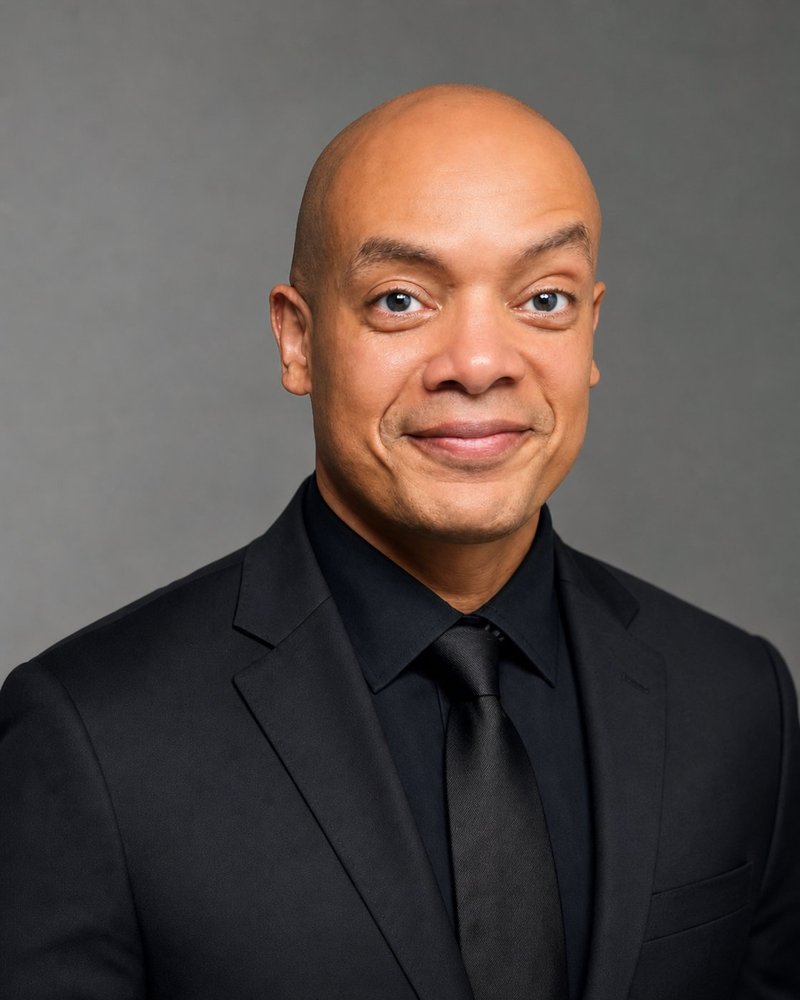
CTE Program Lead — Applied Cybersecurity
Twenty-five years of leadership and operational management came before the classroom. Teaching was never a fallback — it was a deliberate second career built around a single idea: prepare students for what comes next, not just the test.
DHS Cyber is the result — a future-focused program where cyber defense, AI security, infrastructure, and post-quantum skills come together through hands-on learning, problem solving, and real-world application. AI isn't its own class — it's part of everything we do.
“The impediment to action advances action. What stands in the way becomes the way.” — Marcus Aurelius
Questions about the program, the lab, or how a student can get involved.
info@destinhighschool.org